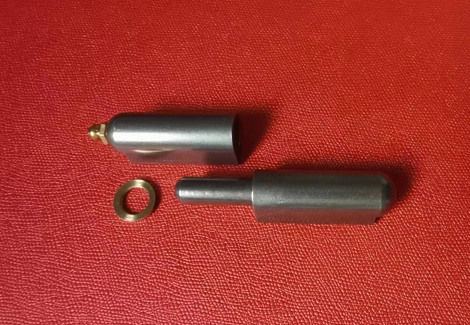
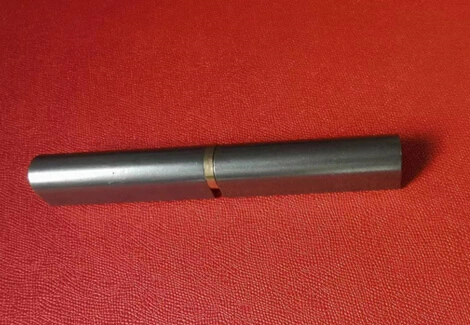
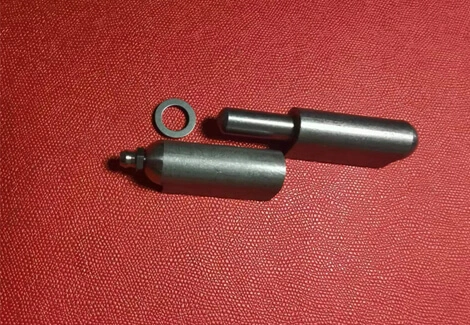
Selecting the correct door hardware is far more than a minor technical detail; it is a foundational decision that dictates the safety, longevity, and operational efficiency of your entire building project. Whether you are an architect designing a modern office space, a contractor working on industrial infrastructure, or a facility manager responsible for building maintenance, the hardware you choose acts as the invisible workhorse of your facility.
Among the various types of aluminium door hinges available, making the wrong choice can lead to cascading issues: doors that sag over time, frame damage due to improper weight distribution, or constant, noisy friction that disrupts the quiet of a professional environment. This comprehensive guide will walk you through the essential factors of hardware selection, the technical differences between hinge models, and why investing in high-quality hardware is the most cost-effective decision you can make.
Before you consider which type to choose, it is vital to perform a thorough audit of the door system itself. Hardware selection should never be based on aesthetics alone; it must be an engineering-based choice rooted in physics and environmental science.
The primary purpose of a hinge is to support the weight of the door leaf while facilitating smooth movement. Standard doors require standard hardware, but if you are dealing with industrial-grade, reinforced, or oversized doors, you must move into the realm of heavy duty aluminium hinges. A failure to calculate the load capacity leads to "hinge fatigue," where the pin and the leaves experience excessive stress, eventually causing the door to drag along the floor and damage the threshold.
A door that is opened twice a day in a residential closet and a door that experiences 500 cycles a day in a busy hospital lobby have entirely different hardware requirements. High-frequency doors require hinges with superior wear resistance and high-quality internal components. If you select a hinge intended for low-frequency use in a high-traffic area, you will be replacing that hardware within months rather than years.
Aluminium is widely lauded for its natural corrosion resistance. Unlike steel, which requires constant painting or galvanization to prevent oxidation, aluminium forms a natural oxide layer that protects it from the elements. However, this does not make all aluminium equal. In coastal environments—where salt air is prevalent—or in industrial facilities with chemical vapors, you need high-grade aluminium that has been specifically engineered to maintain its structural integrity under environmental stress.
To understand how hardware specifications directly translate to performance, let’s look at a head-to-head comparison between our standard and heavy-duty offerings. The following table provides a clear breakdown of why these two hinges serve such distinct purposes.
| Technical Parameter | AFSSP-100G/F (Standard) | AFSSP-200mm (Heavy Duty) |
|---|---|---|
| Total Length | 3.937 inches | 7.874 inches |
| Material Thickness | 0.768 inches | 1.112 inches |
| Hinge Diameter | 0.63 inches | 0.906 inches |
| Pin Diameter | 0.394 inches | 0.63 inches |
| Primary Engineering Focus | Efficiency & Aesthetic Flow | Structural Stability & Load Support |
| Best Application | Office/Residential Partitions | Industrial Gates/Commercial Entrances |
As shown above, the AFSSP-200mm does not merely provide more length; it offers a significantly larger pin diameter and a thicker construction. This increase in dimensions provides a massive boost in shear strength, ensuring the hinge can handle the leverage created by wider or heavier door panels.
The AFSSP-100G/F model represents a perfect balance of performance and subtlety. This hinge is the "gold standard" for projects where the hardware is expected to perform silently and unobtrusively.
In modern architecture, there is a heavy emphasis on clean lines and minimalism. The AFSSP-100G/F is designed to be slim and compact, allowing it to disappear into the overall design of the door frame. Because it is lightweight, it does not exert unnecessary pressure on the door frame, which is particularly beneficial when installing doors into drywall or thin-profile aluminium framing systems.
Modern Interior Design: Perfect for office dividers where quiet, smooth operation is required.
Standard Commercial Doors: Suitable for doors that do not exceed standard weight limits or experience extreme traffic.
Aesthetic-Driven Projects: Where the client requires a sleek, polished look that doesn't overwhelm the visual profile of the door.
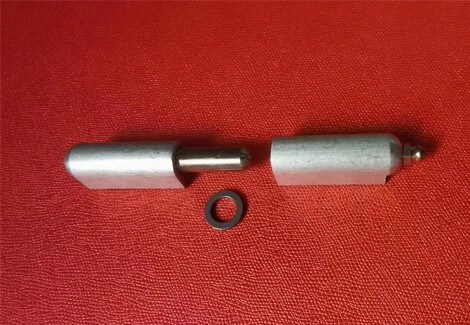
In the world of facility management, downtime is the enemy. A door that won't close, or one that requires constant maintenance to keep it on its track, represents a significant hidden cost. This is where our heavy duty aluminium hinges, exemplified by the AFSSP-200mm, become a critical investment.
The biggest issue with large doors is sagging. As the door opens, gravity pulls it downward, and the hinge pin acts as the pivot point for all that force. The AFSSP-200mm counteracts this by offering a reinforced hinge diameter and a heavy-duty pin that resists bending under extreme loads.
For factories, loading docks, and outdoor enclosures, the AFSSP-200mm is engineered to withstand more than just weight; it is built to survive the environment. Its higher material density provides an extra layer of protection against the daily wear and tear of industrial life, ensuring that your security measures stay secure and your operational flow remains uninterrupted.
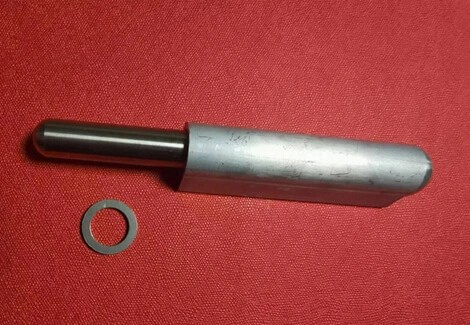
Even the most robust hinge will fail if installed incorrectly or neglected. To maximize the lifespan of your chosen types of aluminium door hinges, follow these professional best practices.
Precision Measurement: Never eyeball the placement. Use a level and a measuring tape to ensure that the hinges are perfectly aligned across the vertical axis of the door frame.
Tool Selection: Use a drill with the correct bit size for your screws. Over-drilling will strip the hole, rendering the screw useless; under-drilling will cause the wood or metal to split.
The "Slow-Tight" Rule: When securing the screws, do not use an impact driver at high speed. Hand-tighten or use a slow speed to ensure the screw is seated properly without stripping the thread.
The Quarterly Check: Every three months, inspect the hinge for any signs of loosening. A quick tighten of the mounting screws is the single most effective way to extend the life of your door.
Cleaning: Use mild detergent and soft cloths. Avoid steel wool or harsh chemicals, which can compromise the protective oxide layer of the aluminium.
Lubrication: If you hear a squeak, use a high-quality silicone-based lubricant. Avoid grease-based products, as these tend to attract dust and grit, which can act like sandpaper inside your hinge and accelerate wear.
In the manufacturing world, consistency is the true mark of quality. At JY Hardware, we have spent years mastering the delicate balance of metallurgical engineering and precision fabrication. We aren't just selling components; we are providing the skeletal support for your projects.
Technical Breadth: Our portfolio includes over 100 variations of welded hinges, ensuring that no matter the specific requirement of your project, we have the specialized hardware to match.
Quality Assurance: We operate under a "quality-first" philosophy. Every hinge that leaves our facility undergoes rigorous testing for stress, load capacity, and material durability.
Expert Consulting: We don't believe in a "one-size-fits-all" approach. We encourage our clients to reach out, share their project specs, and let us recommend the exact hardware that will provide the best long-term value.
Whether you are a developer looking for a reliable long-term supplier or an architect needing custom specifications for a unique build, JY Hardware is your partner in excellence. We invite you to explore our full range of products and see how our commitment to quality can elevate your next installation.
The selection of door hardware is a decision that impacts the daily operations of a building for decades. By correctly identifying the needs of your door—whether it requires the elegant simplicity of the AFSSP-100G/F or the unwavering strength of the AFSSP-200mm—you are effectively protecting your investment against future repair costs and structural failures.
Understanding the various types of aluminium door hinges is the first step toward a building that is safer, more functional, and more efficient. At JY Hardware, we are dedicated to providing the high-performance solutions that keep your doors moving smoothly and your projects standing strong. Contact our technical team today to find the ideal hardware solution for your next project.
1. What are the key differences between standard and heavy duty aluminium hinges?
The main differences lie in dimensions and load capacity. Heavy duty hinges feature thicker construction, larger diameters, and reinforced pins, allowing them to support significantly heavier door weights and endure higher traffic cycles.
2. Is aluminium the best material for all door hinge applications?
Aluminium is excellent for its high strength-to-weight ratio and natural corrosion resistance. It is ideal for most commercial and residential applications, especially in humid or coastal areas, though specialized industrial uses might occasionally require specific steel alloys.
3. Does the length of a hinge significantly impact its performance?
Yes. A longer hinge, such as the 200mm model, distributes the weight of the door over a larger surface area on the frame. This reduces the concentration of stress and helps prevent long-term issues like door drooping or frame misalignment.
4. How do I know if my door hinges are failing?
Signs of failure include audible squeaking, difficulty in opening or closing the door, visible gaps between the door and the frame, or the door dragging along the floor. If you notice these, check for loose screws first; if the screws are tight, the hinge mechanism itself may be fatigued.
5. Can I use JY Hardware products for both indoor and outdoor installations?
Yes. Our aluminium hinges are designed for durability and natural weather resistance, making them highly versatile for both interior office spaces and exterior gates or commercial entryways.