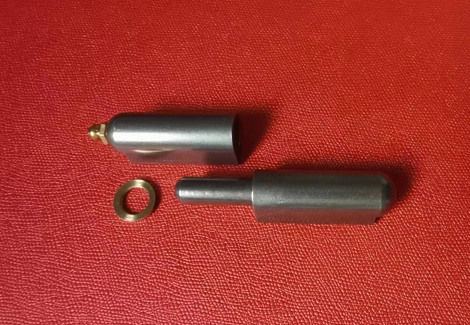
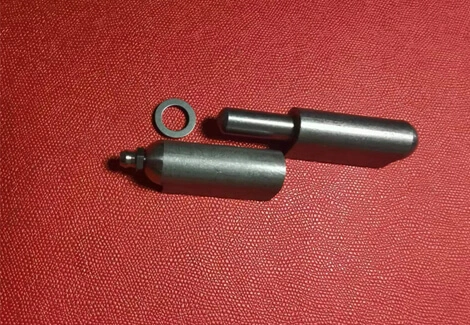
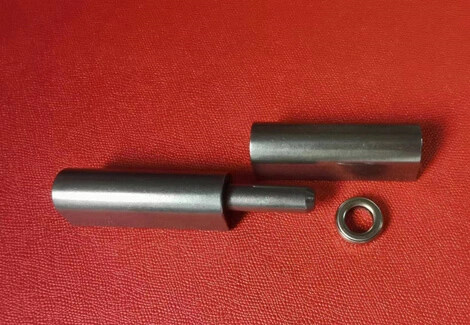
A door may appear simple from the outside, but its long-term performance depends on how well every component works together. In aluminium door systems, the hinge is one of the most critical yet often overlooked elements. It carries the door load, maintains alignment between the sash and frame, and directly affects opening smoothness, sealing performance, and service reliability.
Unlike wooden or steel doors, aluminium doors are built around lightweight extrusion profiles with specific structural characteristics. These differences create unique requirements for hinge design, installation accuracy, and load management. Standard hinges may not provide the stability and compatibility needed for modern aluminium door applications, especially when doors become larger, heavier, or are exposed to frequent operation.
This is why door hinges for aluminium doors require specialized engineering rather than simple replacement hardware. From concealed designs and adjustable solutions to heavy-duty options, different types of aluminium door hinges are developed to meet specific structural and performance demands. Understanding how these hinges work with aluminium profiles helps ensure better door performance, longer service life, and more reliable installation results.
The design of aluminium doors creates specific challenges that directly influence hinge requirements. Aluminium profiles are valued for their lightweight properties and high strength-to-weight ratio, but their structure is different from traditional steel or wooden door systems. The hinge must provide stable support while working within the dimensional limitations of aluminium profiles.
One of the most important considerations is profile compatibility. Aluminium doors are typically manufactured using engineered extrusion profiles with internal chambers, fixing grooves, and different reinforcement structures. A suitable hinge must match these characteristics to ensure that mechanical loads are transferred evenly between the door sash and frame.
Another factor is thermal movement. Aluminium expands and contracts when exposed to temperature changes, especially in outdoor environments. If the hinge does not provide sufficient stability or adjustment capability, these small dimensional changes may gradually affect door alignment, closing performance, and sealing effectiveness.
In addition, aluminium doors are often installed in environments where appearance and operating comfort are equally important. Commercial buildings, office entrances, and modern residential projects usually require doors that can maintain smooth movement after repeated daily use. Therefore, the design of door hinges for aluminium doors must consider both structural strength and long-term user experience.
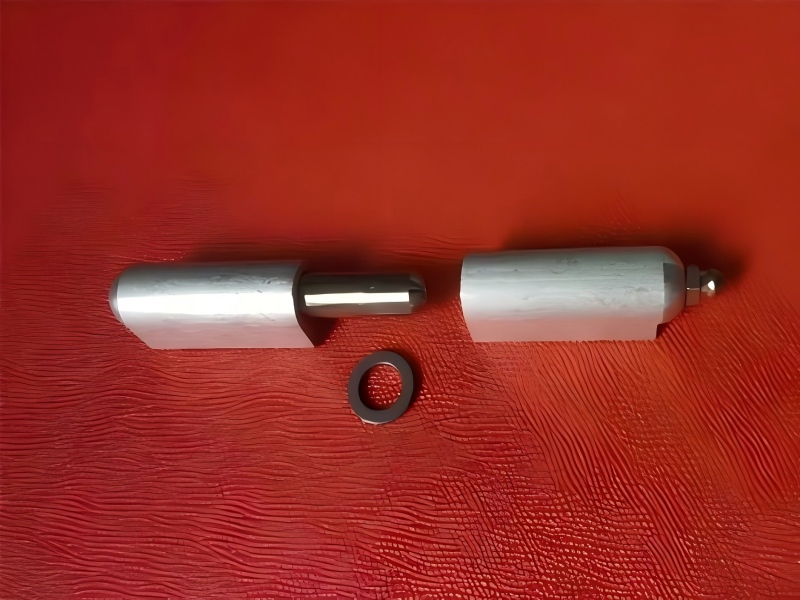
Although aluminium is a lightweight material, aluminium doors can still generate considerable loads when combined with large glass panels, reinforced profiles, or oversized door structures. The hinge must support the complete door assembly while maintaining stable movement throughout the service life.
Load capacity is one of the most important performance factors when selecting door hinges for aluminium doors. The required hinge strength depends on several elements, including door dimensions, door weight, opening frequency, fixing method, and installation environment.
| Comparison Factor | General Door Hinges | Specialized Aluminium Door Hinges |
|---|---|---|
| Profile Compatibility | Designed for general door structures | Developed to match aluminium profile systems |
| Load Distribution | Basic support capability | Optimized for aluminium doors with different sizes and weights |
| Adjustment Function | Usually provides limited adjustment | Allows more precise alignment after installation |
| Application Range | Suitable for standard door applications | Suitable for residential, commercial, and architectural aluminium doors |
| Long-Term Stability | May experience faster wear under frequent operation | Designed for repeated use and improved durability |
A properly selected hinge reduces stress concentration around fixing points and helps prevent common problems such as door sagging, uneven gaps, or difficult operation. This is particularly important for large aluminium doors, where even minor alignment issues can influence overall system performance.
Different aluminium door applications require different hinge structures. Understanding the available types of aluminium door hinges helps users select solutions that match specific performance expectations, installation conditions, and aesthetic requirements.
Concealed hinges are commonly used in modern architectural applications where a clean and minimal appearance is required. Because the hinge mechanism is integrated into the door structure, these hinges help maintain a smooth exterior appearance while providing reliable movement.
Adjustable hinges are another widely used option for aluminium doors. They allow installers to make fine adjustments after installation, which helps correct small alignment differences and maintain proper door operation over time.
Heavy-duty aluminium door hinges are designed for larger doors, high-traffic entrances, and applications requiring stronger support. These hinges typically use reinforced structures and durable components to handle higher loads and frequent opening cycles.
The correct choice among different types of aluminium door hinges depends on the actual application rather than only the appearance of the hardware. Residential aluminium doors may prioritize smooth operation and design integration, while commercial systems often require higher load capacity and stronger durability.
Since aluminium door systems vary in profile design, door weight, and installation requirements, selecting a suitable hinge solution requires careful comparison of different configurations. Reviewing available options in the JY Hinge product can help users better understand suitable hinge solutions for different aluminium door applications.
The performance of door hinges for aluminium doors depends not only on basic strength but also on detailed engineering features. Small improvements in hinge design can significantly influence durability, operating comfort, and maintenance requirements.
Precision manufacturing is one of the key factors affecting hinge reliability. Accurate machining ensures that hinge components fit properly with aluminium profiles, reducing installation errors and improving overall stability.
Material selection also plays an important role. Aluminium door hinges used in demanding environments need strong corrosion resistance to maintain performance when exposed to moisture, temperature changes, or outdoor conditions. Suitable surface treatments further improve durability and appearance retention.
Bearing structures are another important design element. High-quality bearing systems reduce friction during operation, allowing doors to open and close more smoothly while reducing mechanical wear on hinge components.
Adjustment capability is also valuable in real-world applications. Over time, buildings and door systems may experience minor movement caused by temperature changes or regular use. Adjustable hinge designs allow corrections that help maintain proper alignment and extend service performance.
A hinge is not an independent component; it functions as part of a complete aluminium door system. Compatibility between the hinge and aluminium profile directly affects installation quality, structural safety, and long-term reliability.
Different aluminium profiles have different dimensions, reinforcement structures, and fixing methods. A hinge designed for one profile system may not provide sufficient support when installed on another. Poor compatibility can lead to uneven load distribution and unnecessary stress on both the hinge and door frame.
When selecting door hinges for aluminium doors, factors such as profile thickness, mounting position, door weight, and opening direction should be considered together. This ensures that the hinge works efficiently with the entire door structure.
Because aluminium door projects often involve different profile systems and application conditions, confirming technical requirements before selection can help prevent compatibility problems. For projects that require specific hinge matching or technical discussion, relevant details can be shared with JY Hinge through its contact channel.
Reliable door hinges for aluminium doors must maintain stable performance throughout their expected service life. Several factors determine whether a hinge can meet practical application requirements.
Durability is one of the primary considerations. In commercial buildings and public facilities, doors may be operated thousands of times over their lifespan. A reliable hinge needs to maintain smooth movement and structural stability under continuous use.
Corrosion resistance is also essential, especially for exterior aluminium doors. Exposure to humidity, rain, and changing weather conditions can affect hardware performance if unsuitable materials are used.
Installation quality also influences hinge performance. Even a well-designed hinge may fail to deliver expected results if it is incorrectly installed or mismatched with the aluminium profile. Proper installation, accurate adjustment, and correct product selection work together to achieve better long-term performance.
Overall, reliable aluminium door hinges combine mechanical strength, profile compatibility, smooth operation, corrosion resistance, and installation flexibility. These characteristics allow aluminium doors to maintain performance across residential, commercial, and architectural applications.
Aluminium doors require specialized hinge solutions because their lightweight profiles, unique structural designs, and diverse applications create different performance requirements compared with traditional door systems. Selecting suitable door hinges for aluminium doors helps ensure stable support, accurate alignment, smooth operation, and long-term durability.
From concealed designs and adjustable solutions to heavy-duty structures, different types of aluminium door hinges provide options for various door applications. However, the most important factor is ensuring that the hinge matches the aluminium profile, door configuration, and expected operating conditions.
With professional engineering and reliable hardware solutions, JY Hinge supports aluminium door systems that require consistent performance, precise installation, and dependable long-term operation.
Aluminium doors have unique profile structures and load characteristics, so specialized hinges are needed to provide proper support, alignment, and durability.
The main types include concealed hinges, adjustable hinges, and heavy-duty hinges, which are designed for different door structures and application requirements.
Selection should consider door weight, profile structure, installation method, usage frequency, and environmental conditions.
Many aluminium door hinges include adjustment features that allow installers to correct alignment and improve long-term door performance.
Material quality, corrosion resistance, load capacity, installation accuracy, and operating frequency all influence hinge service life.
No. Hinges must match specific aluminium profiles and fixing structures to ensure safe installation and reliable operation.