In the world of facility management and architectural design, small details often dictate the quality of an entire environment. Nowhere is this more apparent than in "quiet zones"—hospitals, libraries, corporate boardrooms, and high-end residential suites. In these spaces, a door that creaks, drags, or rattles is more than just an annoyance; it is a disruption to healing, focus, and privacy.
For facility managers, architects, and procurement officers, the question often arises: Are ball bearing hinges better for these specific environments compared to other hardware solutions? While every hinge type serves a purpose depending on the door’s weight, frequency of use, and budget, ball bearing models are engineered specifically to excel in noise-sensitive and high-traffic areas. This guide explores the mechanics of the ball bearing door hinge and explains why it is a premier choice for maintaining a serene and professional environment.
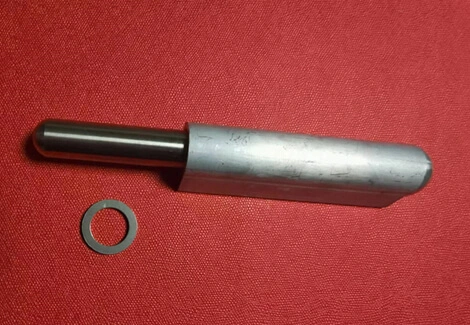
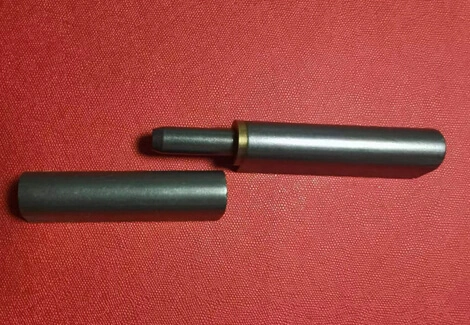
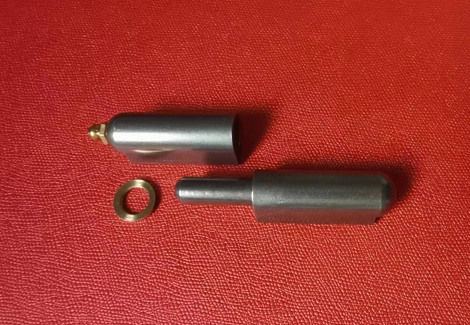
To understand their application, we must look at the engineering. A standard hinge configuration relies on a simple pin-and-knuckle design where metal surfaces rub against each other during every rotation. This surface-to-surface interaction is a reliable, cost-effective solution for many applications, particularly in residential or low-traffic settings where the door is opened infrequently.
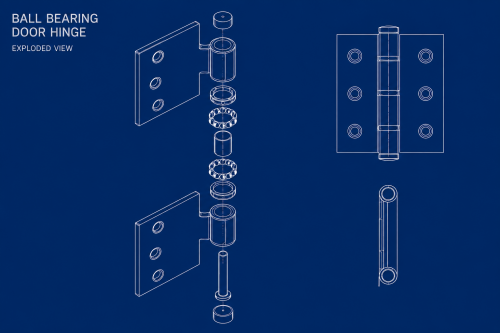
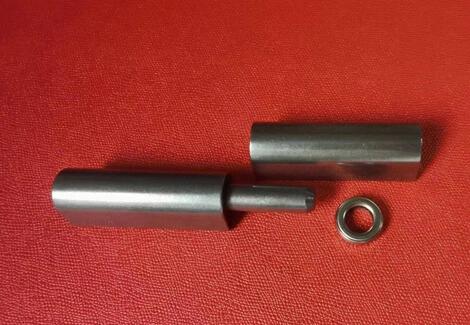
A ball bearing door hinge, by contrast, incorporates hardened steel balls within the hinge knuckles. These balls act as a rolling interface between the hinge leaves. Instead of sliding metal surfaces, the weight of the door is distributed across the ball bearings, which rotate smoothly around the pin. This design converts sliding friction into rolling resistance, which is significantly lower. The result is a door that feels virtually weightless, operates with exceptional fluidity, and maintains its structural alignment over hundreds of thousands of cycles, all while remaining near-silent.
Noise in a door system is typically caused by friction, misalignment, or the accumulation of debris that interferes with the hinge movement.
Because ball bearings maintain a consistent, cushioned gap between the hinge knuckles, the friction is isolated and minimized. In a hospital, where doors are operated by staff, patients, and heavy equipment throughout the day, this design prevents the friction-induced "creaking" common in other hardware. Furthermore, because ball bearing models are built with tight manufacturing tolerances, they minimize the lateral "wobble" that leads to metallic rattling—a frequent noise complaint in older facilities or high-traffic corridors.
Over time, hinges in active environments can collect dust and microscopic grit. While this can cause a scraping sound in many hinge types, the constant rolling motion of the balls in a ball bearing door hinge helps move debris away from the critical load-bearing contact points, ensuring that the operation remains smooth and quiet even in demanding conditions.
Hardware selection should always be driven by the specific needs of the project. There is no "one-size-fits-all" hinge; rather, there is the right tool for the right job.
| Feature | Standard/Washered Hinges | Ball Bearing Door Hinge |
|---|---|---|
| Primary Advantage | Economic Efficiency & Simplicity | Smoothness & High-Traffic Durability |
| Operational Friction | Moderate (Surface-to-Surface) | Low (Rolling Contact) |
| Noise Profile | Functional (May require lubrication) | Near-Silent Operation |
| Load Handling | Ideal for standard residential doors | Excellent for heavy/high-frequency doors |
| Best Application | Low-frequency residential/interior | Hospitals, Offices, Public Buildings |
It is important to note that standard and washered hinges are excellent, cost-effective solutions for many applications. They are highly reliable for doors that do not experience heavy daily usage. However, when the environment demands performance that minimizes sound and maintenance, the ball bearing hinge stands out as the specialized solution.
The need for silent, fluid hardware is a functional requirement in certain environments rather than a preference.
In hospitals, patient recovery is directly linked to the quality of rest. A door that functions silently is a vital component of a healing environment. Ball bearing door hinges are the industry preference in healthcare architecture because they guarantee consistent, silent movement even on heavy, fire-rated, or acoustic-sealed doors, ensuring that staff can perform their duties without disturbing those they care for.
For boardrooms and private offices, privacy is paramount. Conversations must remain confidential, and the environment must be free from corridor distractions. These hinges ensure that acoustic doors open and close with a soft, confident action, reinforcing the professional atmosphere of the workspace.
Libraries, research labs, and study halls require sustained concentration. In these spaces, silent hardware serves as a utility that supports the primary function of the room by eliminating the constant background noise of door movement.
If you are determining whether these hinges are the right fit for your facility, consider these three criteria:
Usage Frequency: If your door cycles more than 20–30 times per day, the reduction in friction provided by ball bearings will significantly extend the life of the door frame and the hinge itself.
Environmental Demands: In settings like hospitals that require frequent sanitization, choose 304 or 316-grade stainless steel ball bearing hinges to ensure the hardware remains rust-free and functional despite moisture exposure.
Door Weight: Heavier, reinforced doors place more pressure on the hinge pin. A ball bearing model helps distribute this weight effectively, preventing the sagging that often leads to noise-inducing misalignment.
At Juyuan (JY Hardware), we realize that a hinge is a vital component of your facility’s safety and performance. We have spent years perfecting our manufacturing processes to deliver high-performance hardware that meets the exacting standards of hospitals, commercial centers, and industrial facilities globally. We do not just manufacture; we consult. Our team works directly with your technical requirements and drawings to ensure that the material, thickness, and structural design of your hinges are perfectly matched to the weight, usage frequency, and specific environmental demands of your project. This collaborative engineering approach ensures that you receive a solution tailored for long-term reliability rather than a generic part.
Our commitment to excellence is reflected in our rigorous quality assurance protocols, where every hinge undergoes testing to comply with international ISO and ANSI standards. Whether you need a unique hole pattern, specific alloy grades, or specialized surface treatments, we possess the manufacturing agility to meet your exact project deadline. We are proud to serve as a technical partner to facilities managers and engineers worldwide, providing the reliable hardware that keeps your operations moving forward. We invite you to explore our full range of products and contact our technical team today to discuss the specific requirements for your next industrial project.
Deciding whether to use ball bearing hinges is a matter of matching your hardware to your facility's operational goals. While standard hinge designs remain a staple for many residential and low-traffic applications due to their simplicity and value, the ball bearing hinge offers distinct advantages for environments where silence, durability, and high-frequency use are priorities. By reducing friction and ensuring consistent operation, these hinges are an essential investment for hospitals, offices, and quiet zones. At Juyuan, we are dedicated to helping you select the perfect hardware from our diverse product catalog to ensure your building remains as functional as it is professional.
1. Are ball bearing hinges better for all types of doors?
Not necessarily. They are the ideal choice for high-traffic, heavy, or noise-sensitive doors. For low-use residential interior doors, simpler hinge types remain highly effective and economical.
2. Do ball bearing hinges require more maintenance than standard hinges?
Actually, they often require less. Because they reduce friction, they experience less internal wear and tear and do not need frequent lubrication to maintain a quiet operation.
3. Can I retrofit existing doors with ball bearing hinges?
Yes. In most cases, ball bearing hinges are designed to match standard industry template patterns, making them excellent candidates for retrofitting to resolve noise issues in existing facilities.
4. How do I choose the correct bearing count?
For standard commercial doors, a 2-bearing setup is often sufficient. For heavier, lead-lined, or exceptionally high-traffic doors, a 4-bearing hinge provides superior weight distribution and smoothness.
5. Why are these hinges preferred for hospitals?
They provide the silent operation necessary for patient rest while offering the durability required for doors that are cycled thousands of times per week by staff and equipment.