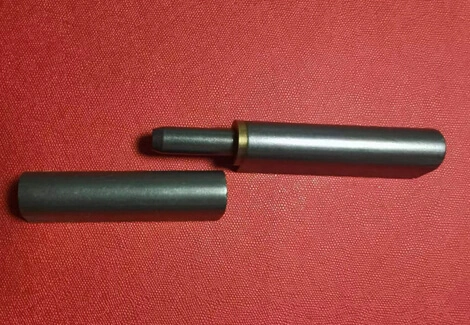
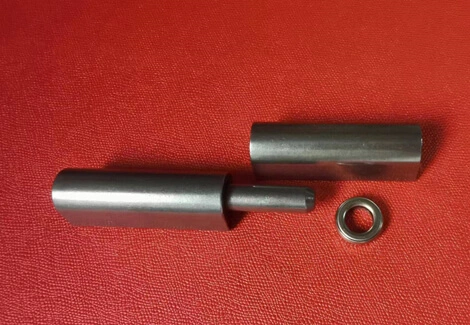
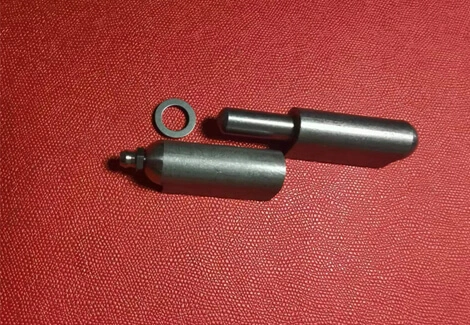
An aluminium door may look relatively light and simple, but the hinge supporting it has to deal with much more than the door's static weight. Every opening and closing movement creates a small amount of load and friction at the hinge. Over time, these repeated movements can expose weaknesses in the hinge body, pin, fixing points, or door alignment.
That is why hinge selection should start with the way a door will actually be used. A small door in a low-traffic area has very different requirements from a wide commercial entrance that is opened throughout the day. Looking at the types of aluminium door hinges in relation to door weight and usage frequency gives manufacturers, distributors, and project buyers a more practical way to make a specification. It also makes comparisons of aluminium door hinges price more meaningful, since price is only one part of the overall selection.
Door weight is the obvious starting point, but it is not the only load-related factor. The width and height of the door affect how that weight acts on the hinges, while the position of the hinges determines how effectively the load is distributed between the door and frame.
Usage frequency changes the picture again. A door that is opened a few times a day places relatively little repeated stress on its hinges. A door in an office, shop, apartment building, or commercial entrance may move dozens or hundreds of times during a busy day. The cumulative effect of those movements makes wear resistance and hinge construction much more important.
Other hardware can also change the operating conditions. A door closer, for example, introduces additional resistance during opening and controls the return movement. Outdoor exposure may introduce moisture and corrosion concerns, while an aluminium profile with limited fixing space may restrict the hinge design that can be used.
These factors are closely connected. A heavy door that is rarely opened may have different requirements from a lighter door that operates continuously. Instead of defining a hinge only as “light duty” or “heavy duty,” it is more useful to consider the complete combination of weight, dimensions, frequency, installation, and environment.
| Door application | Typical operating condition | What matters most | Hinge selection direction |
|---|---|---|---|
| Lightweight, occasional use | Light door with limited daily operation | Basic load support, secure fixing, smooth movement | Compact and appropriately sized construction |
| Medium-weight, regular use | Office, residential, or general commercial door | Load stability, wear resistance, alignment | Stronger construction with reliable fixing |
| Heavy, frequent use | Large door in a busy entrance | Load capacity, durability, controlled movement | Heavy-duty construction suited to the door system |
| High-traffic commercial system | Intensive daily operation | Long-term stability and resistance to repeated loading | Application-specific specification and installation |
For a lightweight aluminium door that is not used heavily, there is usually little benefit in specifying an oversized hinge simply because it has a higher nominal capacity. The hinge still needs to support the door securely, but its dimensions and construction should make sense for the profile and available fixing area.
Compact butt-style hinges and surface-mounted designs are often considered for this type of application. The choice between them depends on the door construction and how the hinge needs to connect with the frame. A hinge that fits the visual design but does not provide sufficient fixing engagement is unlikely to perform well in practice.
Cost can become particularly important when hundreds or thousands of hinges are being purchased for standard doors. This is where aluminium door hinges price needs to be considered carefully. A low unit price may be attractive, but the comparison should also include material, hinge thickness, manufacturing quality, finish, and the expected operating environment.
For buyers reviewing different constructions, JY Hinge's aluminium door hinge range provides a starting point for comparing available designs and applications. The useful question is not simply which hinge costs less, but whether its construction matches the door profile and the conditions in which the door will operate.
Medium-weight doors are where hinge selection becomes less straightforward. These doors are often found in offices, residential buildings, retail spaces, workshops, and other locations where the door is used throughout the day but is not necessarily exposed to the extreme traffic of a public entrance.
Repeated operation makes small differences in construction more noticeable. The hinge needs to remain properly aligned as the door moves, while the pin and knuckle need to tolerate repeated contact and movement. The fixing area also has to transfer the door load into the aluminium profile without gradually becoming loose.
Material thickness and surface treatment are worth examining, but neither tells the whole story. The relationship between the hinge body, pin, knuckle, and fixing points determines how the assembly behaves under load. Installation matters just as much. If the door is not aligned correctly, even a well-made hinge can be subjected to unnecessary stress.
The number of hinges should also be considered as part of the overall door design. More hinges can help distribute the load, but simply adding hinges is not a substitute for selecting the correct construction. The door frame and profile must be able to support the fixing points, and the hinges need to work together rather than compensate for weaknesses elsewhere in the system.
When comparing the types of aluminium door hinges for regular-use doors, this is why specifications are more useful than appearance. Two hinges can look almost identical while differing in material thickness, pin construction, machining accuracy, or fixing strength. Those differences may not be obvious when the door is first installed, but they can become important after prolonged use.

Heavy doors used frequently place the greatest demands on the hinge assembly. Commercial entrances are a typical example: the door may be relatively large, operated repeatedly, and fitted with additional hardware that affects the force required to open and close it.
In these conditions, hinge construction becomes a structural issue rather than simply a hardware choice. A suitable heavy-duty hinge may use a stronger body, reinforced knuckle, durable pin, larger fixing area, or bearing arrangement designed to manage repeated movement. The exact configuration should be matched to the door rather than selected from the label “heavy duty” alone.
Door width deserves particular attention. A wide door can place considerable leverage on the hinge side, so two doors with similar weights may not create identical loads at the hinge. The location of the hinge, the rigidity of the frame, and the way the door is supported all influence the final result.
High-frequency use adds another layer of wear. A hinge can appear perfectly stable during an initial installation inspection while gradually developing play after prolonged operation. If the door begins to sag or becomes harder to move, the problem may not be the hinge alone; alignment, fasteners, frame deformation, or the door closer may also be contributing factors.
For this reason, buyers sourcing heavy-duty types of aluminium door hinges should provide the supplier with actual project information whenever possible. Door dimensions, approximate weight, profile details, expected operating frequency, and installation conditions give the manufacturer a much better basis for recommending a suitable construction than a general request for a “strong aluminium hinge.”
A published load capacity is useful, but it should not be treated as a guarantee of service life under every condition. The actual life of a hinge depends on how that load is applied and how often the hinge has to handle it.
Consider two doors with the same weight. If one is narrow and rarely used while the other is wide and opened repeatedly throughout the day, the hinge assemblies are operating under very different conditions. The second application places greater emphasis on construction, alignment, friction control, and resistance to repeated loading.
The hinge body and pin are particularly important. Adequate material thickness helps the body resist deformation, while a properly designed pin and knuckle allow the hinge to pivot without excessive movement. The quality of the fixing area is equally important because the hinge ultimately has to transfer the door load into the frame.
Surface treatment also has a practical role. Where hinges are exposed to moisture or changing environmental conditions, corrosion resistance can affect both appearance and mechanical reliability. For indoor applications, other factors such as wear and fixing stability may be more significant.
This helps explain differences in aluminium door hinges price. Manufacturing cost can be affected by material selection, machining accuracy, structural reinforcement, surface treatment, and quality control. A price comparison that ignores these factors does not necessarily show which product represents better value for the intended application.
Commercial projects usually involve a wider range of requirements than a standard residential door. A distributor may need one hinge for an interior aluminium door and another for a frequently used entrance, while an OEM manufacturer may need consistent hardware across several door models.
The selection process becomes easier when the door system is defined before suppliers are compared. The basic information includes the door's approximate weight and dimensions, the aluminium profile, hinge mounting position, expected frequency of operation, surrounding environment, and any additional hardware that affects movement.
Once these conditions are clear, the types of aluminium door hinges can be narrowed down according to actual requirements. This also prevents price from becoming the only deciding factor. A hinge that costs less at the quotation stage may not be the most economical choice if it is poorly matched to the application and needs frequent adjustment or replacement.
For distributors and project buyers, consistency is another consideration. Using a clearly defined hinge specification across similar door systems can simplify purchasing, installation, and future replacement. It also makes quotations easier to compare because suppliers are responding to the same technical requirements.
JY Hinge works with aluminium door hardware requirements across different applications, including projects where standard dimensions are not enough to determine the appropriate hinge. When a buyer has a specific door profile or operating condition, providing those details together with the required quantity allows the quotation to be based on the actual application rather than a generic product description. Buyers can discuss their aluminium door hinge requirements with JY Hinge when they need help matching a hinge specification with a particular door system.
There is no single aluminium door hinge that fits every door. Lightweight doors with occasional use can generally work with simpler, compact constructions, while medium-weight doors used regularly require greater attention to alignment, fixing strength, and wear resistance. Heavy doors and high-traffic entrances place greater demands on the hinge body, pin, load distribution, and overall installation.
Understanding the types of aluminium door hinges in relation to actual operating conditions gives buyers a clearer way to compare products. It also makes aluminium door hinges price easier to assess because the cost can be considered alongside construction, expected service conditions, and long-term reliability.
For manufacturers, distributors, and project purchasers, the most practical approach is to define the door and its operating environment first, then select the hinge around those requirements. That process reduces the risk of choosing a hinge simply because it looks suitable or has a lower quoted price, and it provides a stronger technical basis for long-term door performance.
Common options include butt-style hinges, surface-mounted hinges, concealed hinges, and heavy-duty designs. The appropriate type depends on the door's weight, dimensions, profile, installation method, and usage frequency.
Greater door weight increases the load carried by the hinge. The hinge must have suitable structural strength and fixing support to maintain stable operation.
Yes. They can be suitable for high-traffic applications when the hinge construction, load capacity, fixing method, and durability correspond to the door's operating conditions.
Not necessarily. Price should be considered together with materials, construction, manufacturing precision, surface treatment, load requirements, and expected service conditions.
Not necessarily. The number of hinges depends on the door dimensions, weight, hinge design, frame structure, and manufacturer's recommendations. Hinge quantity should be considered together with load distribution and installation quality.
Door weight, dimensions, aluminium profile details, hinge position, expected usage frequency, installation environment, required quantity, and any special requirements can help the supplier recommend a suitable hinge and provide a more accurate quotation.